Working: 8.00am - 5.00pm

Working: 8.00am - 5.00pm
The Science Behind EECP Therapy
The Cardiologists' Recommended, Non-Surgical Option for Heart Recovery




Welcome! Start Growing Your Business Today
EECP therapy has been shown to support healthier blood vessels by improving how they expand and contract (vascular dilation). It may help reduce substances that narrow blood vessels (like endothelin-1) while increasing those that help them relax (like nitric oxide), leading to smoother blood flow and reduced resistance in the arteries. Additionally, EECP may lower the heart’s oxygen demand and workload, particularly in people with chronic stable angina or heart failure. Studies have observed improvements in blood circulation, including increased cardiac output and reduced systolic blood pressure, contributing to more balanced cardiovascular performance.
EECP therapy may help the body form new pathways for blood flow, called collateral circulation, by gently increasing blood movement and pressure. This process can encourage the growth of tiny blood vessels around blocked or narrowed arteries, helping improve blood supply to the heart muscle. Research shows that EECP may increase important repair signals and cells (like VEGF, SDF-1α, and endothelial progenitor cells) that play a role in restoring healthy circulation. Over time, this may contribute to improved heart tissue oxygenation and more resilient vascular function.
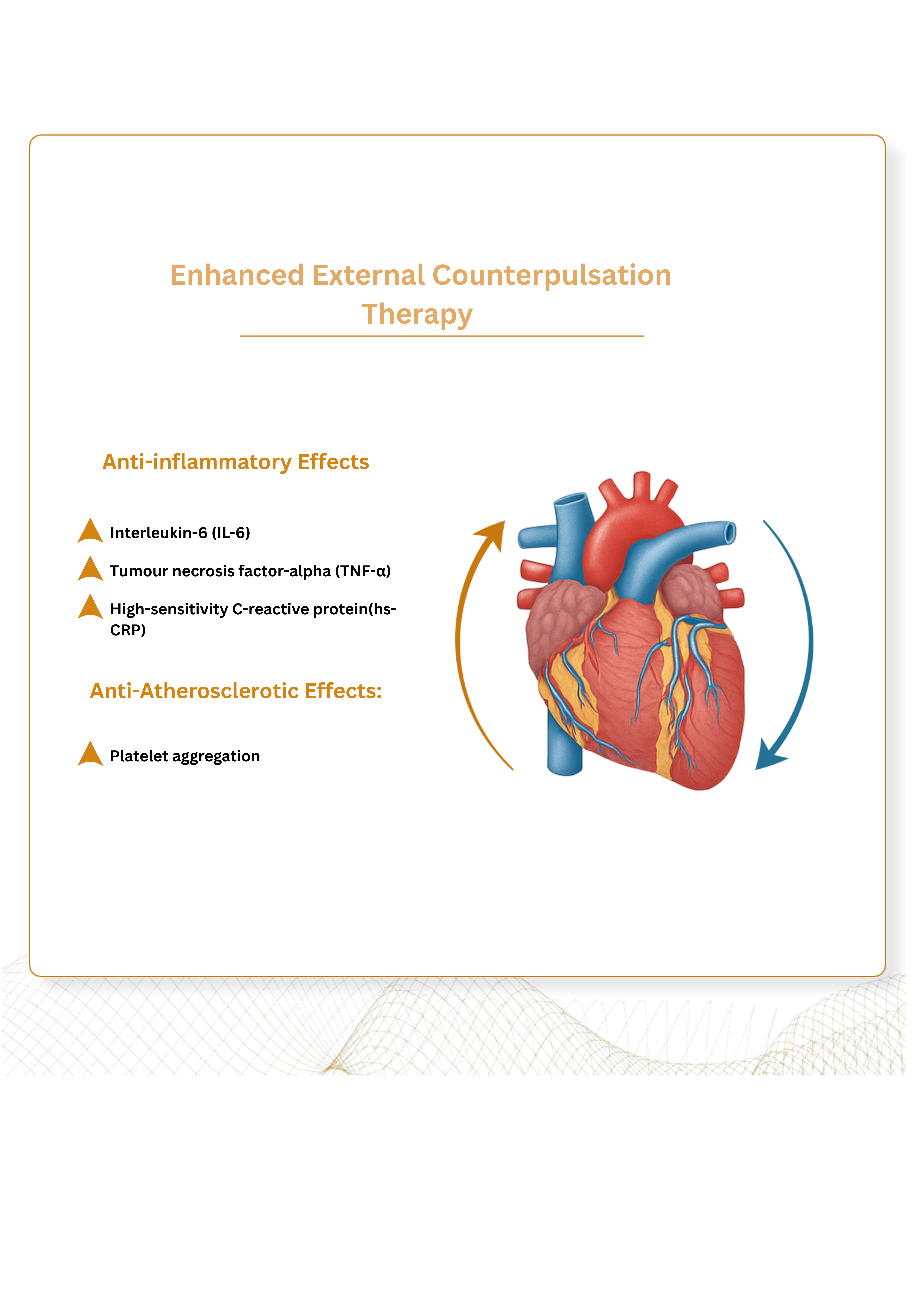
EECP therapy may help reduce inflammation in the blood vessels, a key factor in many heart conditions. Studies suggest it can lower certain inflammatory markers like IL-6, TNF-α, and hs-CRP, which are often elevated in patients with angina. By easing this underlying inflammation, EECP may support healthier blood vessels and slow the development of further damage, helping maintain better long-term cardiovascular health.
The treatment may also reduce platelet stickiness and decrease signals that cause arteries to narrow, potentially helping to prevent further blockages. Over time, these effects may promote better flexibility and function of your blood vessels..
Together, these effects help in reducing chest pain, improving the ability to exercise, and enhancing the overall quality of life without surgery or drugs.
Reference.
1. He, X., et al. (2024). Enhanced external counterpulsation in cardiac rehabilitation in patients with coronary heart disease: A literature review. Cardiology Plus, 9(2), 111–119.
A Stepwise Overview of EECP Therapy for Cardiac Care.
Shaping better heart health through controlled, evidence-based steps.
You’ll lie down on a padded therapy table in a relaxed, comfortable setting. There’s no need for sedation or a hospital stay, as EECP is completely non-invasive.
Soft, inflatable cuffs are wrapped around your calves, thighs, and buttocks. These cuffs are similar to large blood pressure sleeves.
As your heart beats, the cuffs inflate and deflate in sync with your heartbeat. This timing is controlled through real-time monitoring of your ECG and blood pressure.
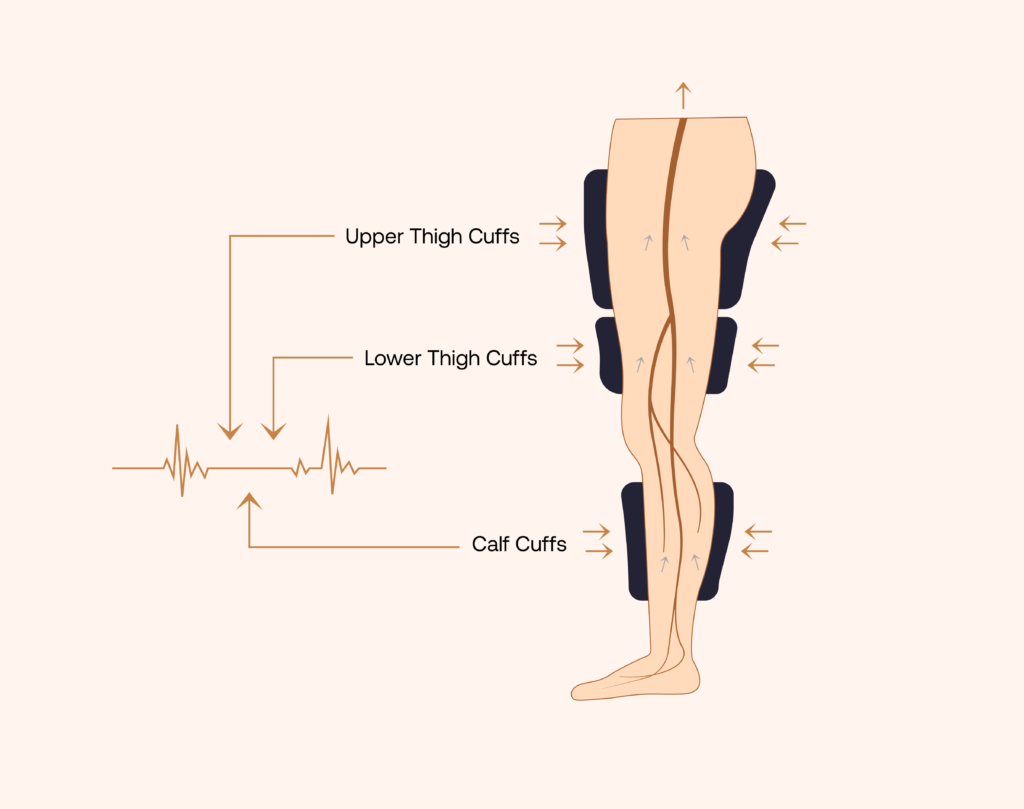
The cuffs inflate in a wave-like sequence from your ankles upward, gently pushing oxygen-rich blood back to your heart. This help:
Over time, the repeated compression encourages your body to form new blood vessels called “collaterals” around the blocked arteries. This process is often referred to as a “natural bypass”.
Each session lasts about one hour. There’s no pain, and once you're used to the gentle pressure, most patients find it soothing. After the session, the cuffs are removed, and you can walk out and return to your normal routine.


Cuffs inflate in a timed sequence during diastole, pushing blood and a supply of oxygen toward the heart, improving circulation.
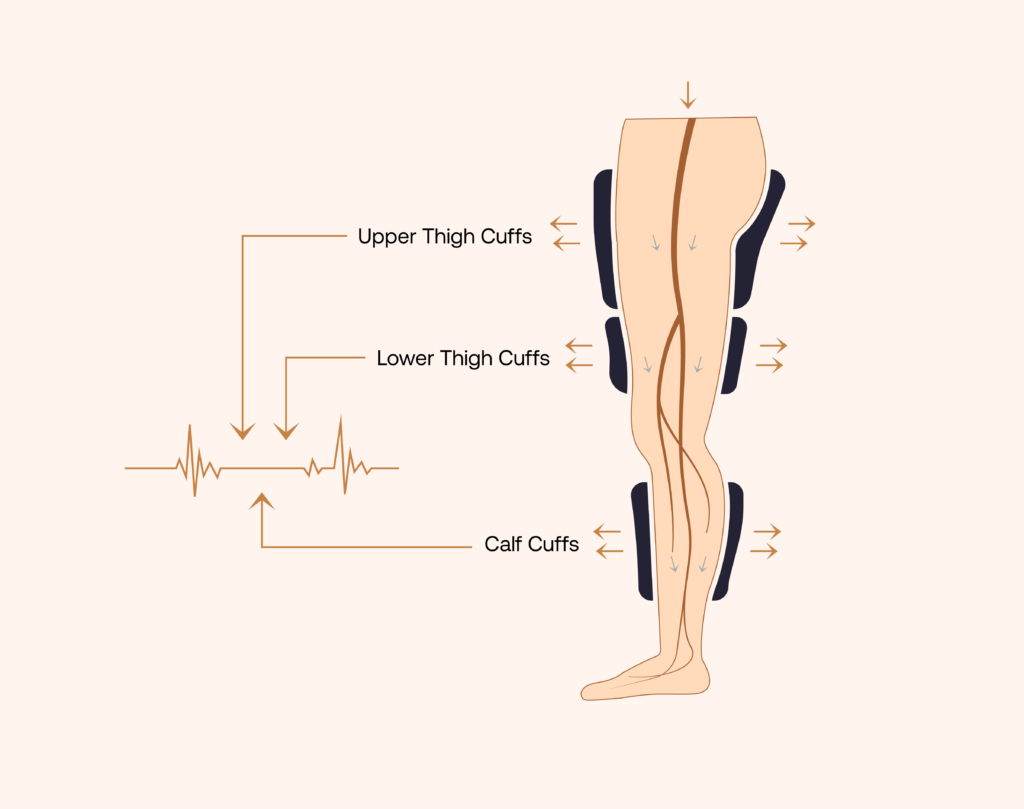
All cuffs deflate together just before systole, reducing vascular resistance and easing the heart’s workload.
EECP Therapy: Comprehensive Support for Diverse Heart Conditions
What Patients Are Saying About EECP Therapy?
Heal Your Heart Without Surgery
Not every heart needs surgery to heal. EECP therapy could be the right option for you. Check your eligibility and take the first step toward lasting heart health.
Clinical E icacy of EECPTherapy
A 2024 prospective cohort study published in The American Journal of Cardiology found thatEECP therapy leads to significant reductions in Canadian Cardiovascular Society (CCS) angina class and improvements in exercise tolerance among patients with angina and no obstructive coronary artery disease (ANOCA),supporting its use as a non-invasive treatment option in this population.
A 2021 meta-analysis published in Medicine (Baltimore) evaluated the impact ofEECP on patients with chronic heart failure.The study found that EECP significantly improved exercise capacity and left ventricular ejection fraction,and reduced levels of N-terminal pro-brain natriuretic peptide (NT-proBNP).
A 2020 observational study published in Cureus highlighted thatEECP significantly improved quality of lifeand reduced chest pain in coronary heart disease patients,especially those unfitfor coronary artery bypass grafting or percutaneous coronary intervention.EECP not only offers long-lasting symptom relief but also promotes beneficial structural changes in the heart,supporting its role as an effective,non-invasive treatment option for heart failure and refractory angina
A 2025 randomised controlled trial published in Frontiers in Cardiovascular Medicine demonstrated that EECP therapy significantly reduces anxiety and depression levels in patients with paroxysmal atrial fibrillation,highlighting its potential as a non-invasive adjunctive treatment for psychological symptoms in cardiac patients
A 2022 retrospective analysis published by theAmerican College of Cardiology evaluated the effects ofEECP therapy in 50 patients experiencing long COVID symptoms.The study found thatEECP significantly improved fatigue,dyspnoea, chest discomfort,and walking capacity,highlighting its potential as a non-invasive therapeutic option for managing persistent post-COVID cardiovascular and respiratory complaints.
A 2021 review in Frontiers in Cardiovascular Medicine highlights EECP as a safe,non-invasive treatment that significantly reduces angina symptoms,decreases nitrate usage,and enhances exercise tolerance in patients with refractory angina.Itis particularly beneficial forindividuals unsuitable forfurther revascularisation procedures.
A 2021 review in Frontiers in Cardiovascular Medicine highlights EECP as a A 2023 review in Current Cardiology Reports concluded thatEECP is a safe,non-invasive therapy that improves functional capacity and reduces short-term rehospitalisations within six months in patients with ischaemic heart failure.Benefits are aMributed to increased shear stress,enhancing myocardial perfusion.While systolic function improvements remain uncertain,consistent gains in diastolic function and exercise tolerance were observed.
A 2023 review in Medtigo Journal highlighted thatEECP therapy has demonstrated significant clinical efficacy in improving myocardial perfusion,endothelial function,and reducing angina symptoms. Its noninvasive nature makes ita viable adjunct or alternative forpatients with refractory angina,heart failure,and other cardiovascular conditions,especially when invasive options are limited or contraindicated.
Long-Term Clinical Outcomes After EECP
A landmark study published in The American Journal of Cardiology (2006) evaluated the long-term outcomes ofEECP therapy in patients with refractory angina and leftventricular dysfunction.
Study Group: 363 patients with refractory angina and LV ejectionfraction ≤ 35%
Key Findings
72% of patients improved from severe angina to no or mild angina post-treatment
Substantial improvement reported, maintained in 55% of patients at 2-year follow-up
2-year survival rate was 83%; major adverse cardiovascular event-free survival rate was 70%
43% had no reported cardiac hospitalisation; 81% had no reported congestive heart failure events
Performed in 20% of patients; failure to complete the initial EECP course was a significant predictor for repeat therapy (hazard ratio 2.9, 95% confidence interval 1.7 to 4.9)
Join Hands to Expand Heart Care
Refer with Confidence:
Empower your patients with FDA-approved, non-invasive EECP therapy— Trusted by physicians, supported by science, and focused on enhancing outcomes.
Let’s Connect and Transform Cardiac Care,Together

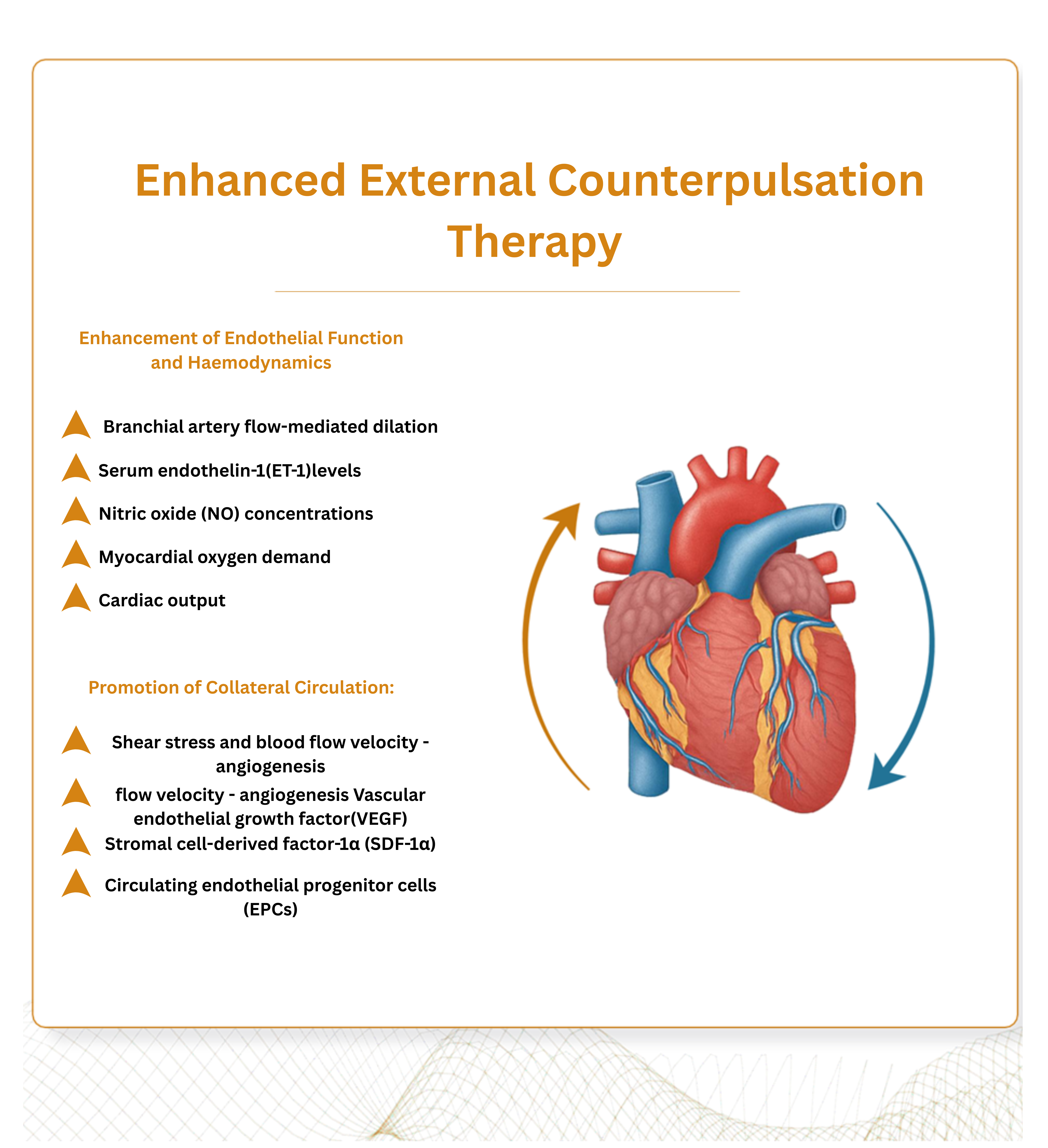
Collectively, these mechanisms contribute to the alleviation of angina symptoms, improvement in exercise tolerance, and overall enhancement of quality of life in patients undergoing EECP therapy.
© 2025 MyShatak - All Rights Reserved.